Protecting critical mezzanine supports with more than 80 PolyWRAP protectors
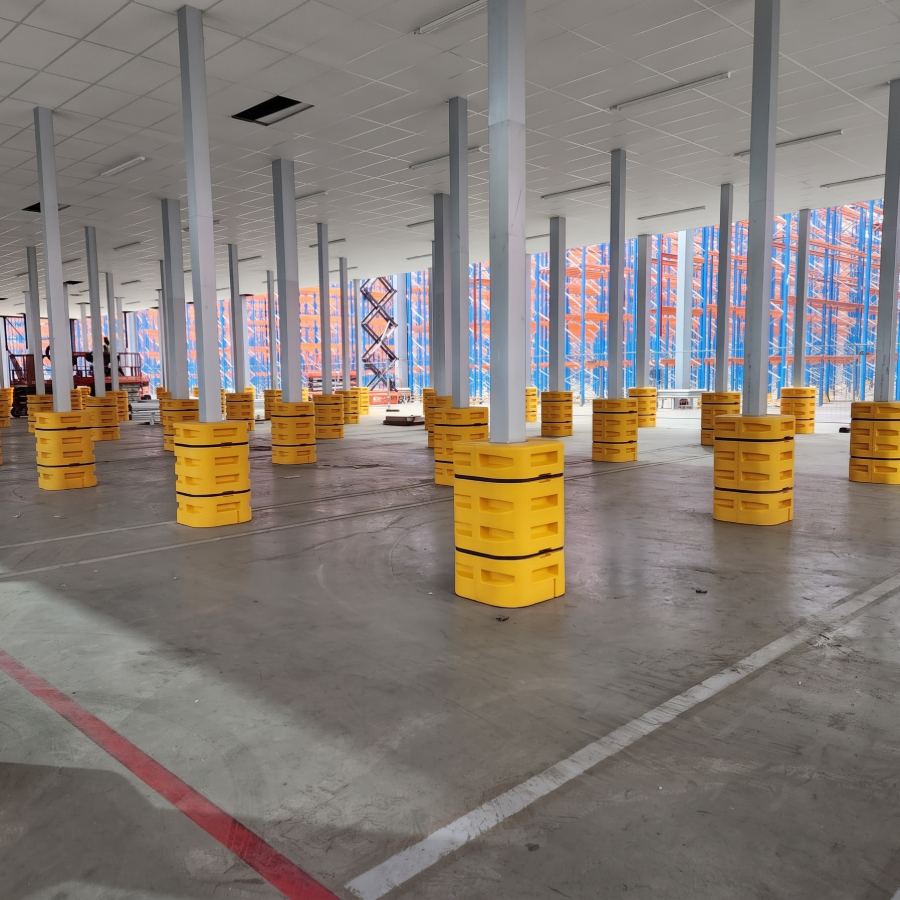
Brandsafe supplied more than 80 PolyWRAP Column Protectors for a mezzanine protection project in Stanford-le-Hope.
The project focused on the structural columns supporting the mezzanine. These fixed supports needed physical protection against accidental impacts, alongside a clear visual presence within the working area.
PolyWRAP combined these functions in a wrap-around design. The protectors formed a visible, cushioning layer around the columns, helping address the risk of direct contact with exposed steelwork.
Although the project centred on one product, it addressed an important part of the facility. Mezzanine columns support the space above them. Protecting those columns also means considering the activity taking place around their bases.
The project at a glance
- Location: Stanford-le-Hope.
- Project focus: Critical columns supporting a mezzanine.
- Product supplied: PolyWRAP Column Protectors.
- Scale: More than 80 protectors.
- Purpose: Physical impact protection and improved column visibility.
Why mezzanine columns need protection
Mezzanines create additional floor space within a building. However, their supporting columns remain part of the layout below. People, equipment and materials may need to move between them throughout the working day.
Where handling equipment operates close to these supports, there is a risk of accidental contact. The position of a column can make that risk more noticeable. For example, a support near a turning point presents a different challenge from one away from traffic.
For the Stanford-le-Hope project, the priority was the mezzanine supports themselves. Adding protection around these columns addressed the fixed structures that needed attention.
For similar projects, a column’s location and the activity around it should guide the protection specification. The number of columns alone cannot explain the risks each one faces.
View PolyWRAP Column ProtectorsPhysical protection with a clear visual presence
PolyWRAP is designed to cushion accidental contact around mezzanine columns. Its moulded polyethylene body provides a physical layer between the exposed column and passing equipment.
The protector also makes the column more noticeable. This visual role matters because drivers need to recognise obstacles as they approach them. Protection and visibility therefore serve related purposes within the same working area.
At Stanford-le-Hope, these two functions were central to the brief. The requirement was to protect critical supports while making their position clear within the facility.
Across the protected area, the repeated use of PolyWRAP gave the columns a consistent appearance. Each fitted protector identified another fixed point within the mezzanine layout.


A wrap-around design for existing columns
PolyWRAP uses a two-piece design that fits around the column. Ratchet straps hold the sections in place, without mechanical fixings into the floor or steelwork.
The range includes moulded sizes for common structural column profiles. Foam infill can help fit the protector around I-beams and other profiles. Exact column measurements are therefore important when selecting a protector.
These fitting details are relevant when planning protection across a larger mezzanine. Columns can look similar in photographs while having different dimensions or base details. Checking them early helps establish which product sizes are needed.
For a project involving more than 80 protectors, an accurate column schedule can also make the requirements easier to organise. It provides a reference for product quantities, positions and any differences between locations.


Considering the space around each support
Column protection needs to work within the surrounding layout. Once fitted, a protector occupies space around the steelwork. That space should be considered alongside the routes used by people and equipment.
The size of each PolyWRAP unit should match the column profile and surrounding space. The remaining clearance must also suit the equipment and loads using each route.
For similar mezzanine projects, useful questions include:
- Which vehicles or handling equipment pass the columns?
- Are loads wider than the equipment carrying them?
- Where do vehicles turn or reverse?
- How much clearance remains once protection is fitted?
- Are nearby doors, walkways or access points affected?
These questions help connect the product choice to daily activity. They also encourage a closer look at locations where the available space is limited.
HSE guidance on protecting structures considers vehicle weight, speed, impact angle and the likely consequences of a collision. These factors help explain why protection should be selected for the conditions at each site.
Choosing protection for the wider site
Protecting a mezzanine can involve several types of risk. The right system depends on the column size, nearby traffic and how people use the space.
- For smaller columns in restricted spaces, PolyWRAP SpaceSaver Column Protectors offer a slimmer option within the range.
- Where forks or pallets may contact the base, PolyWRAP Forklift Impact Skirts add low-level steel protection to compatible PolyWRAP and SpaceSaver units.
- Where a steel barrier system is needed around a column, SteelWRAP Column Protection provides Armco rails on all four sides.
- In pedestrian areas, SoftWRAP i-Beam Protectors and SoftWRAP Square Column Protectors cushion accidental contact with exposed columns.
- Around vehicle routes, pedestrian barriers and safety gates help define walkways and planned access points.
These options can support a wider site protection plan. Brandsafe can help select systems that suit the layout, available space and risks involved.
Explore column protectionKeeping protection effective as the site changes
A protection layout should remain part of the site’s ongoing review. New equipment, different load sizes or changes to storage can alter how people and vehicles use an area.
For example, a route that once carried small pallet trucks may later serve larger handling equipment. A change like this can affect the clearance and protection needed around nearby columns.
Known impacts should be reported through the site’s procedures. The condition of the protector, its fastening and the underlying column should then be assessed as appropriate. A visible cover should not be treated as proof that the steelwork beneath it is undamaged.
These checks help keep the protection relevant to the way the facility actually operates.
Plan your mezzanine column protection
The Stanford-le-Hope project centred on a clear requirement: protect critical mezzanine columns and make them easier to see. More than 80 PolyWRAP protectors supported that approach.
Whether you are reviewing a small mezzanine or a larger facility, Brandsafe can help you explore the options. Useful starting information includes column dimensions, site photographs, a layout drawing and details of the equipment operating nearby.
Our team can help assess the product requirements and identify where other forms of protection may be useful. This may include SpaceSaver units, compatible impact skirts or systems for nearby pedestrian routes.
Discuss your project