A Two-Level Defence for Vulnerable Aisle Ends
Brandsafe was contacted directly by Baker Ross to help protect exposed warehouse racking at its Harlow facility.
Racking ends are especially vulnerable. Their position beside turning areas leaves them exposed to impacts from forklift trucks and other material handling equipment. Lowered or misaligned fork tines present a second, less obvious risk because they can pass beneath conventional barriers and strike the racking at floor level.
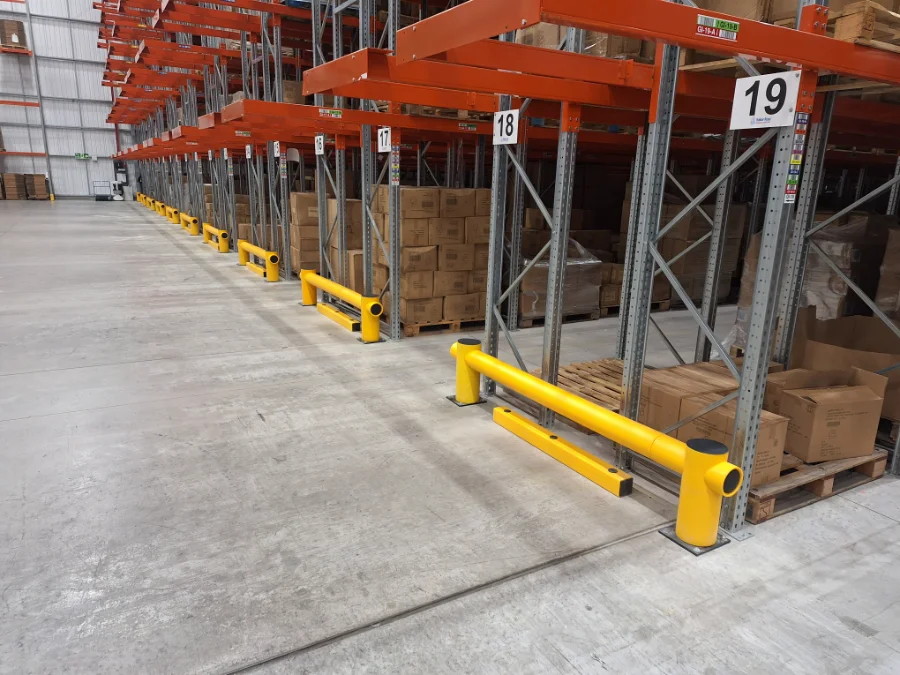
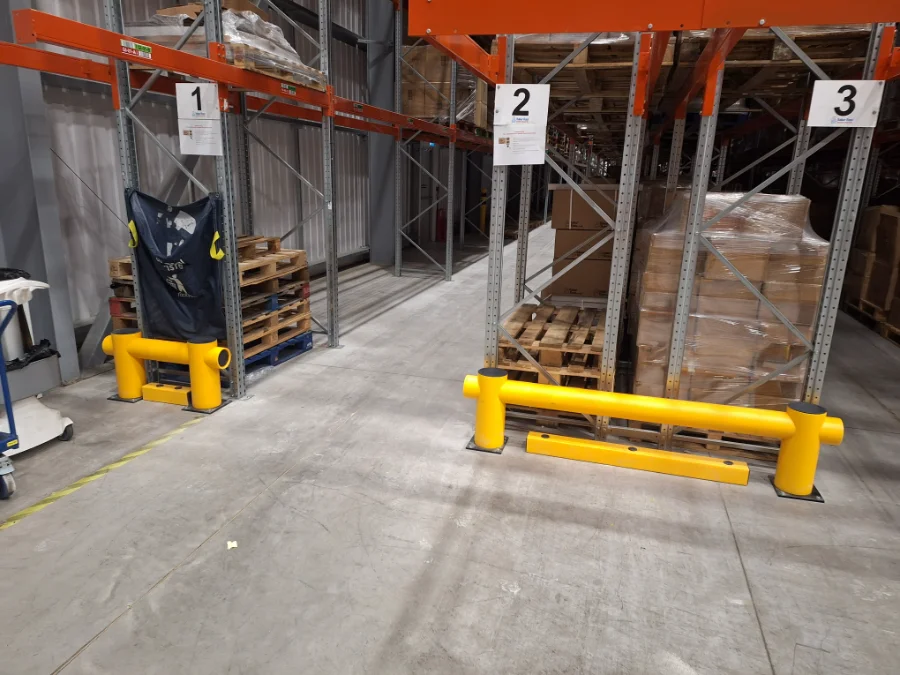
To address both risks, Polymer Rack End Barriers were combined with Floor Rail Bumpers. The main barriers protect the exposed aisle ends, while the low-level bumpers help prevent fork tines from reaching the base of the racking.
Together, the products create a compact, layered system without unnecessarily restricting the surrounding operational space. Desgined to protect exposed aisle ends.
Project Details
End client: Baker Ross
Location: Harlow, Essex
Sector: Retail and e-commerce distribution
Project type: Warehouse racking protection
Products installed: Polymer Rack End Barriers and Floor Rail Bumpers
Polymer Protection at the End of Each Aisle
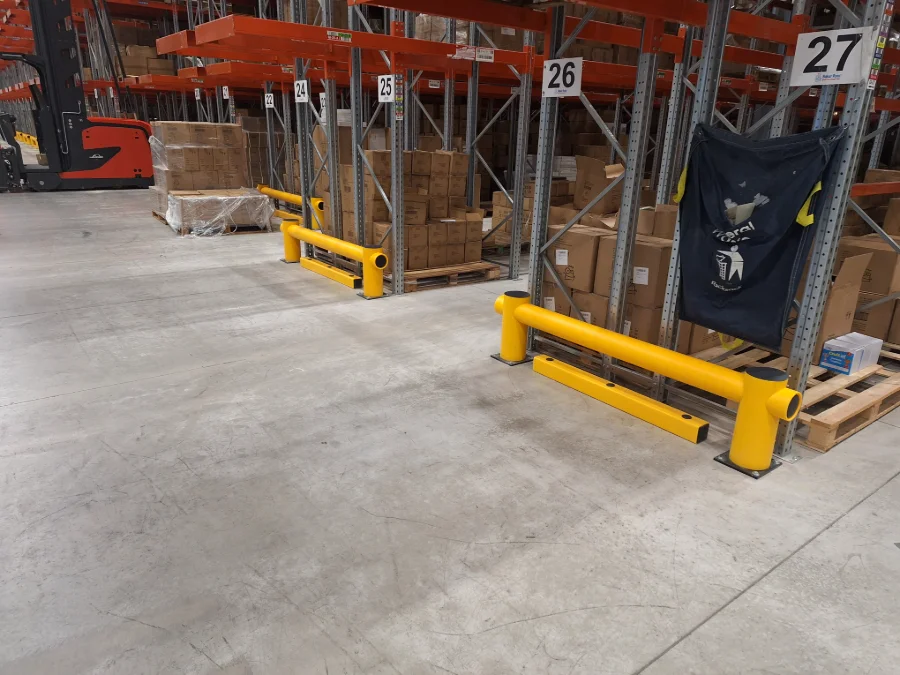
Polymer Rack End Barriers were installed at the exposed ends of the storage system. Their yellow and grey finish creates a clear visual boundary for MHE operators approaching or turning into an aisle.
Made from flexible high-density polyethylene, the barriers are designed to deflect during an impact and then reform. This helps absorb energy before it reaches the racking. It can also reduce the force transferred into the floor compared with a completely rigid system.
Their performance is supported by documented test data. The barriers have been impact tested to 4,600 joules at 90 degrees and 9,200 joules at 45 degrees, with a measured deflection of 195 mm.
These figures should not be considered in isolation. Vehicle type, mass, operating speed, likely impact angle and available deflection clearance should all inform the final specification.
Closing the Gap at Floor Level
Although the main barriers provide protection against broader vehicle contact, fork tines create a separate and more concentrated risk at floor level.
When forks are carried too low or become misaligned, they can pass beneath the primary barrier rail and strike the racking base or uprights. This potential impact path required its own solution. Floor Rail Bumpers were therefore installed along the floor beneath the rack end barriers, creating an additional protective layer where the main system leaves clearance.
The bumpers help intercept low-level contact before the fork tines can reach the storage structure. At 100 mm high and 100 mm wide, they provide a compact profile without taking up unnecessary working space within the aisle. Selected lengths were also cut to size on site to suit the requirements of the installation.
Like the rack end barriers, the bumpers are manufactured from flexible HDPE. The material is designed to flex under routine contact and then reform. This provides durable, low-maintenance protection in a particularly exposed part of the warehouse, while the safety-yellow finish strengthens visibility at floor level.
Selecting Protection for Different Racking Risks
Not every warehouse or racking layout presents the same impact risk. Protection should therefore be selected around the exposure at each location, rather than applying one product throughout the facility.
Rack end barriers are well suited to exposed aisle ends where turning MHE could come into contact with the storage structure. Individual upright protectors, such as Rack Armour, provide a more localised defence around vulnerable racking uprights. For areas requiring a rigid steel system, an Armco Rack End Barrier may be more appropriate.
Where higher levels of low-level impact protection are required, PAS 13-tested Single and Double Bumper Barriers can also be considered. The Single Bumper Barrier has been tested to 11,000 joules at 90 degrees, while the Double Bumper Barrier has been tested to 14,200 joules at 90 degrees.
SpaceSaver barrier systems offer another option. Their compact construction can provide protection where working clearances are limited and minimising intrusion into the aisle is important.
The final specification should reflect how the area is actually used. Relevant factors include the type of MHE, vehicle mass and speed, likely impact angle, available space, floor condition and fixing requirements. Flexible systems must also have sufficient clearance to deflect safely without contacting the asset they are intended to protect.

Protection Must Be Supported by Inspection
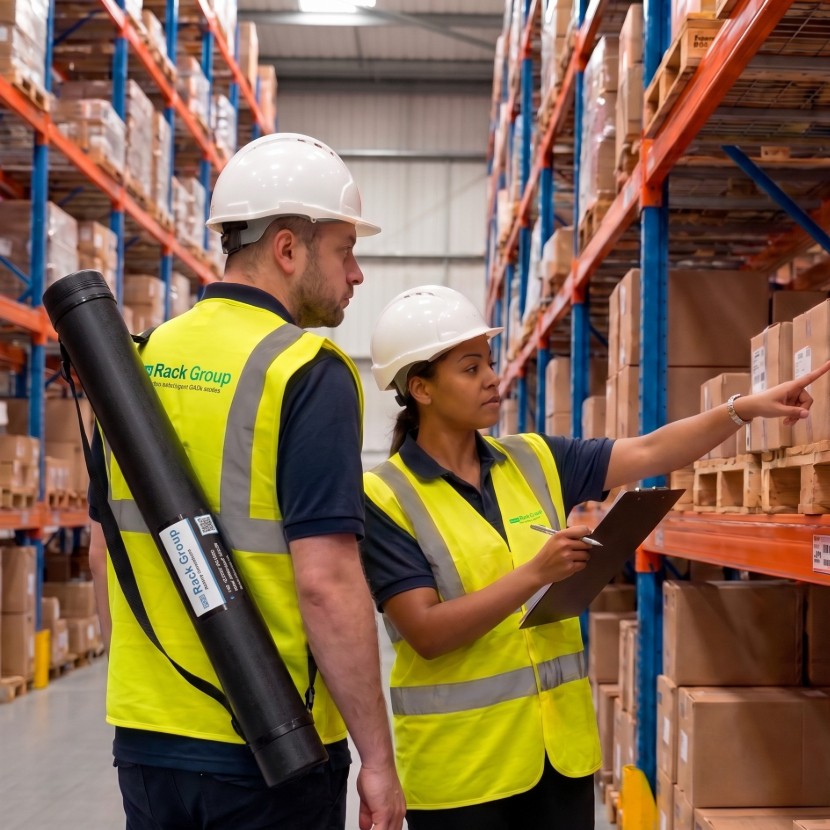
Physical protection can reduce both the likelihood and severity of racking damage.
However, it cannot replace an effective inspection and damage-reporting system.
HSE guidance for warehousing and storage addresses this risk directly. It states that racking should be protected where vehicle strikes are foreseeable.
Lower sections and corner uprights face an especially high risk of impact. These locations often sit closest to turning or passing vehicles.
The guidance also recommends regular visual inspections based on each site’s risk assessment. Weekly inspections may be appropriate, although operating conditions should determine the final frequency.
A formal written record should document each inspection and any identified damage. Expert inspections should occur at intervals no longer than 12 months. They must be completed by a technically competent person.
HSG76 also references SEMA guidance for assessing and classifying racking damage.
Every impact should be reported promptly, even when damage appears minor. The barrier, racking and surrounding floor should then be carefully assessed. Unsafe areas should remain isolated until suitable repairs have been completed.
Layered Protection at the Point of Risk
This Harlow installation demonstrates how two complementary products can address different impact paths within the same area.
The Polymer Rack End Barriers provide the primary protection around exposed aisle ends. The Floor Rail Bumpers reinforce the system at ground level, helping to prevent lowered or misaligned fork tines from reaching the racking beneath the main barrier rail.
Together, they provide a focused racking protection system that supports safer vehicle movement and helps protect critical warehouse infrastructure.
If you are reviewing warehouse racking protection, Brandsafe can assess the risks present within your facility and recommend a suitable combination of barriers, upright protectors and low-level protection.
Protect Your Warehouse Racking. Speak to Brandsafe about suitable protection for vulnerable aisle ends, uprights and low-level impact risks.