A Damaged Barrier Should Trigger a Wider Safety Review
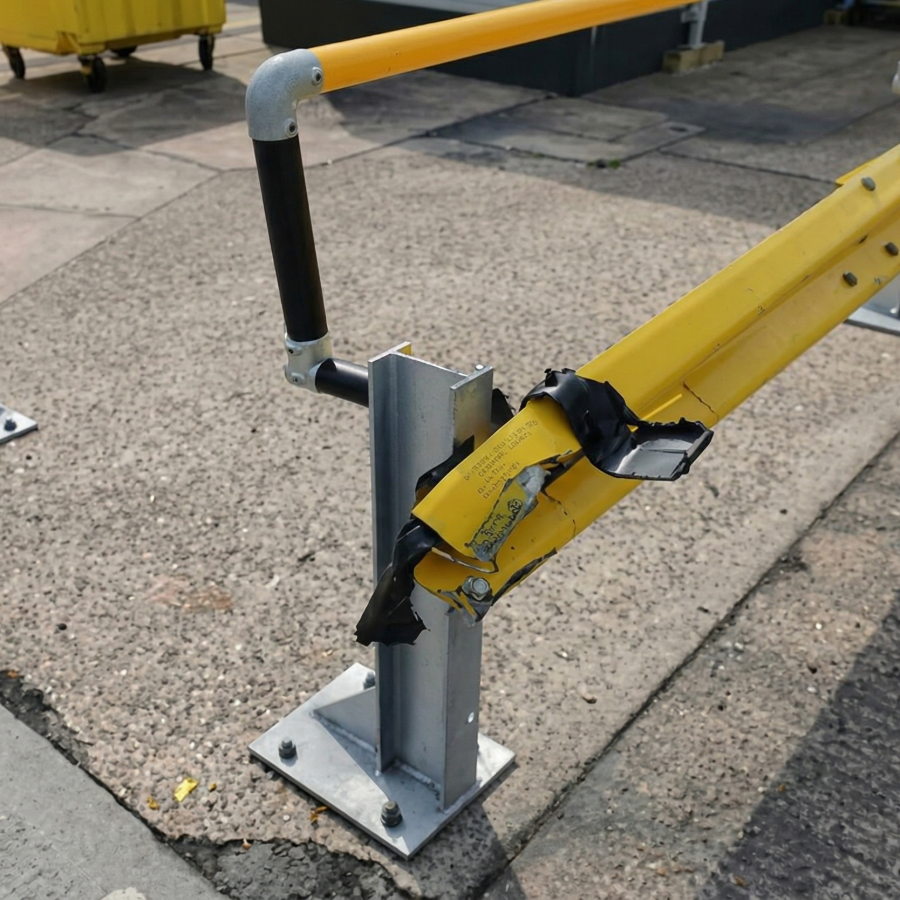
A forklift, pallet truck or other item of material handling equipment has struck a safety barrier. The barrier might show little more than a surface mark, or it may be bent, cracked, displaced or pulling away from the floor.
The correct response is not always to replace the entire barrier. Equally, a barrier that appears to have returned to its original position should not automatically be assumed ready for the next impact.
Here, we explain what to do after a warehouse barrier is struck, what should be inspected, and how to decide whether the right response is repair, replacement or a wider redesign of the area.
By the Brandsafe Technical Team

Quick facts
If a damaged barrier protects pedestrians or critical infrastructure, restrict access to the area until its condition has been assessed.
Inspect the entire barrier system after a known impact, including the rails, posts, connections, anchors and surrounding floor.
A polymer barrier returning to its original shape does not remove the need to inspect its fixings, baseplates and substrate.
Repeated damage at the same location may indicate a problem with the route, visibility, speed, turning space or barrier specification.
Impact performance is specific to the tested product and configuration. Check the energy rating, impact angle, deflection, post spacing, anchors and test conditions.
Record every known impact and the action taken. A clear damage history helps identify recurring problems and supports repair, replacement or redesign decisions.
Is a damaged safety barrier always unsafe?
Not necessarily.
A light surface scuff may be cosmetic, particularly where no movement, deformation or connection damage is present. However, appearance alone cannot confirm whether a barrier remains suitable for use.
An impact can affect more than the point where the vehicle made contact. Forces may travel through the rail and into the posts, baseplates, anchors and concrete slab. The protected structure or equipment behind the barrier may also have been contacted if the barrier deflected during the collision.
The purpose of an impact protection barrier is to manage a foreseeable collision. Evidence of an impact may therefore show that the barrier has performed its intended function. It should also prompt a proportionate inspection and review.

What counts as barrier damage?
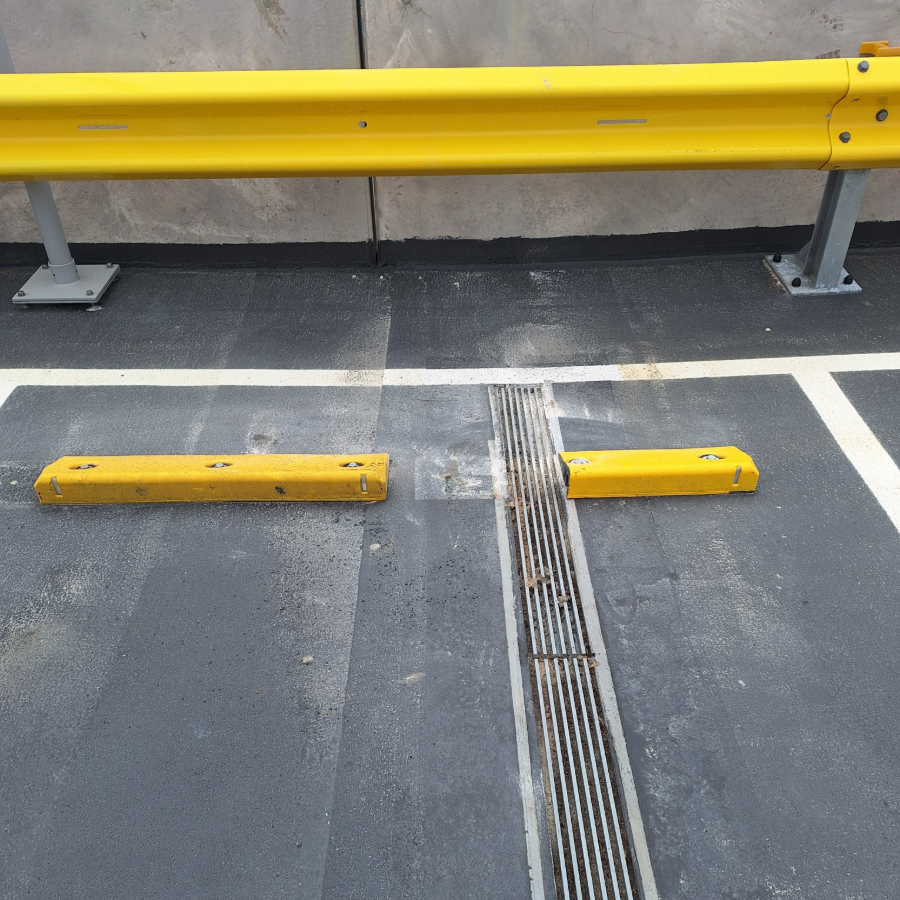
Different observations during a site safety audit can indicate different levels of concern.
The below observations are general indicators, not universal pass or fail criteria. The barrier manufacturer’s instructions, product design and the circumstances of the impact should all be considered.
Surface scuffing or colour transfer
- What It May Indicate
- Possible cosmetic contact
- Initial Response
- Record the impact and inspect the complete system.
Rail or post remains displaced
- What It May Indicate
- Permanent deformation or connection movement
- Initial Response
- Restrict the area and arrange a competent assessment.
Crack, split, deep cut or puncture
- What It May Indicate
- Possible material damage
- Initial Response
- Take the affected section out of service.
Loose or missing anchor
- What It May Indicate
- Compromised connection to the floor
- Initial Response
- Isolate the protected area.
Lifted or twisted baseplate
- What It May Indicate
- Movement within the post and fixing assembly
- Initial Response
- Inspect the post, anchors and concrete.
Cracked or spalled concrete
- What It May Indicate
- Possible failure of the supporting substrate
- Initial Response
- Obtain competent advice before refixing.
Opened joint or missing component
- What It May Indicate
- Interrupted load path through the barrier
- Initial Response
- Repair only using an approved component and method.
Contact with the protected asset
- What It May Indicate
- Barrier deflection or capacity may have been exceeded
- Initial Response
- Inspect both the barrier and the asset behind it.
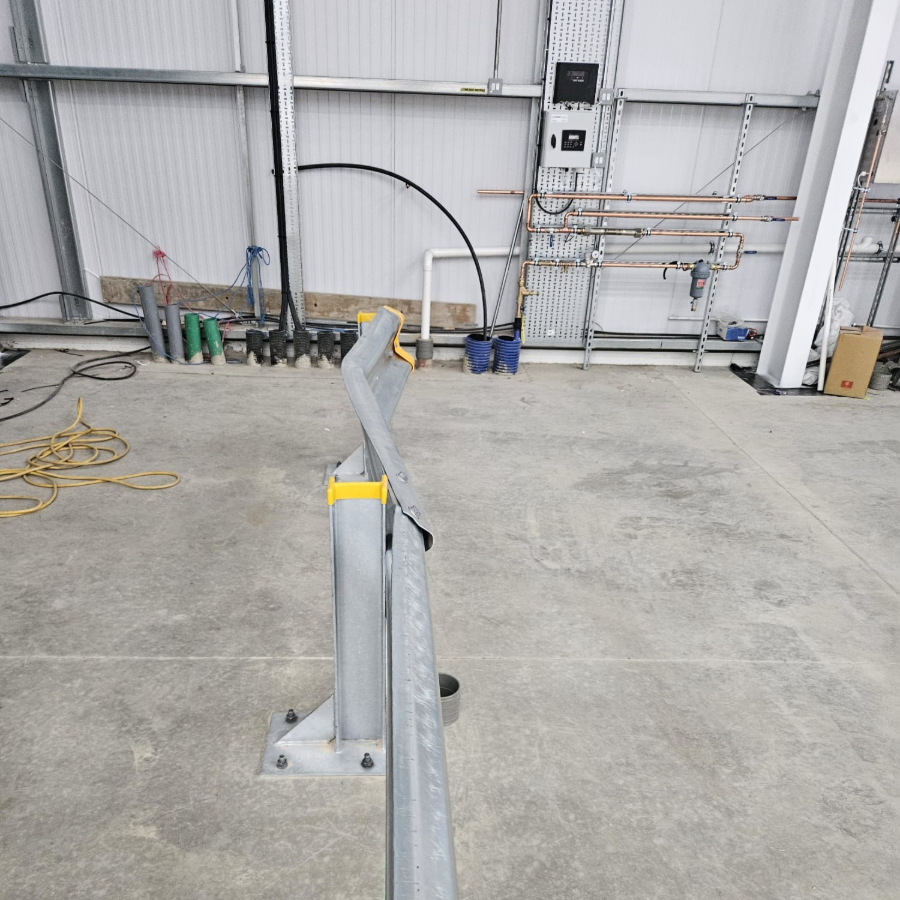
What should you do immediately after an impact?
Make the area safe
If the barrier protects a pedestrian route, doorway, column, machine, service or other critical asset, restrict access until its condition is understood. Temporary controls may be needed while the permanent protection is assessed.
Follow the site incident procedure
Check whether anyone has been injured and whether the vehicle, racking, machinery, building fabric or stored materials have also been affected. Record and escalate the incident in accordance with the organisation’s procedures and any applicable reporting requirements.
Record the evidence
Photograph:
- The point of impact
- The complete barrier run
- Each post and connection
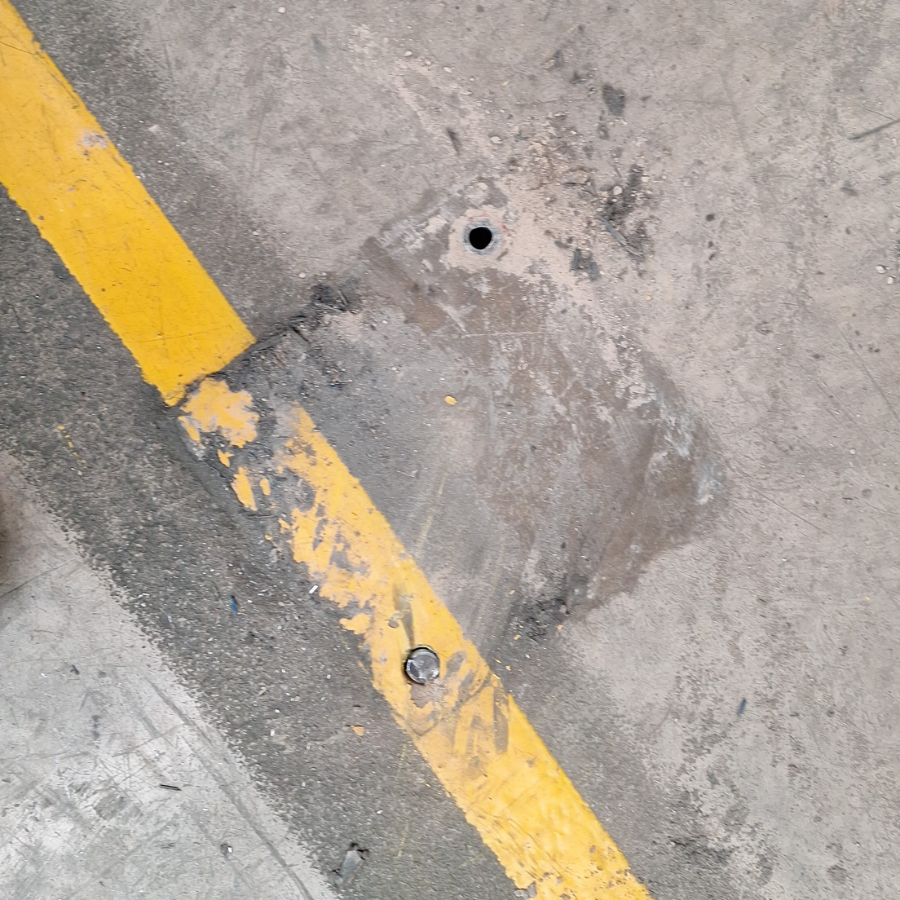
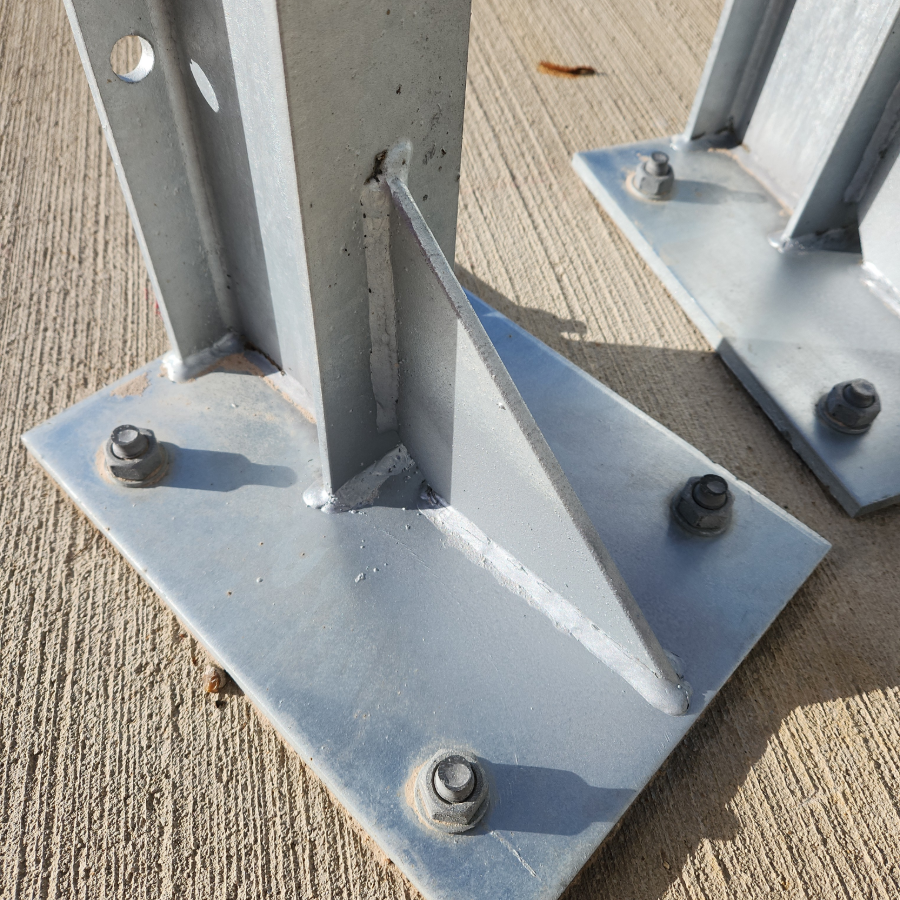
- Baseplates and anchors
- The surrounding concrete
- The vehicle and its load, where appropriate
- The asset or pedestrian area behind the barrier
Also record the date, location, vehicle type, approximate load, direction of travel and any available information about speed or angle.
Inspect the complete system
Look for permanent deformation, cracks, displaced components, opened joints, loose fixings, floor damage and reduced clearance. Compare the affected section with an undamaged section of the same system where possible.
Make a documented decision
The decision to return a barrier to service should be made by a suitably competent person, with advice from the manufacturer or supplier where the barrier’s condition or performance is uncertain.
Do not straighten, weld, heat, re-anchor or otherwise modify an impact protection product unless the method has been assessed and approved for that system.
Repair, Replace or Redesign?
Once the area has been made safe and the damage recorded, the next decision is whether the barrier can be repaired, must be replaced or whether the protection and surrounding area should be redesigned.
The correct response depends on the product, extent of damage, condition of the fixings and floor, manufacturer guidance and whether the original system remains suitable for the identified risk.
Repair
Consider repair when the damage is fully understood, the manufacturer supports the work and the original configuration can be restored using approved components and fixings.
Replace
Consider replacement when components are cracked, split, permanently deformed or displaced, when the fixings or concrete are damaged, or when an approved repair cannot restore the required protection.
Redesign
Consider redesign when impacts recur or when the route, visibility, turning space, speed, pedestrian movement, barrier position or available deflection clearance continues to create risk.
Should the barrier be repaired?
Repair may be appropriate where:
- The extent of the damage is clearly understood
- The manufacturer supports component-level replacement or repair
- The posts, anchors, floor and adjoining sections remain suitable
- Approved components and fixings are available
- The original configuration can be restored
- The work will be completed and checked by competent personnel
A repair should restore the functional protection of the system. Repainting a damaged steel surface may improve visibility and corrosion protection, but it does not correct permanent deformation or connection damage.

When should a barrier be replaced?
Replacement should be considered where:
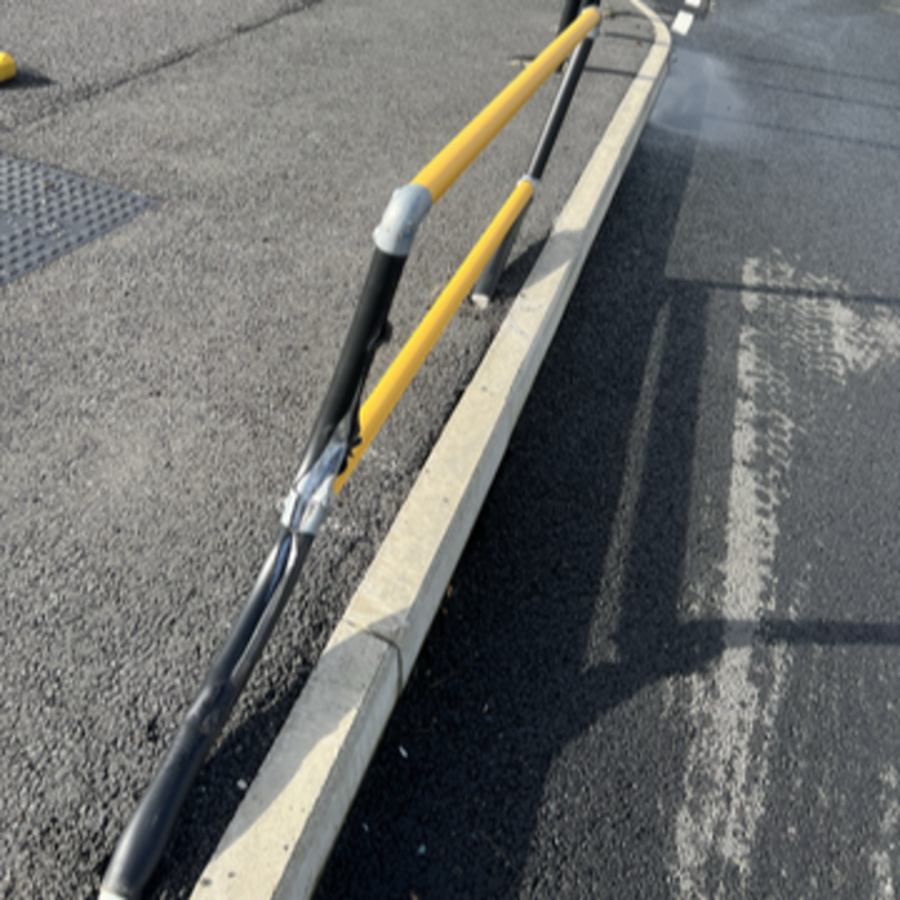
- A structural component is cracked, split or permanently deformed
- A post or rail no longer returns to its intended position
- Anchors, baseplates or the concrete substrate have been damaged
- Connections have opened or components are missing
- The original product, specification or impact rating cannot be confirmed
- Compatible replacement parts are unavailable
- An approved repair cannot restore the intended system
- The barrier no longer provides the necessary clearance or protection
Replacement does functional protection of the system. Repainting a damaged steel surface may improve visibility and corrosion protection, but it does not correct permanent deformation or connection damage.
When should the area be redesigned?
If the same barrier is being struck repeatedly, replacing it with an identical product may only repeat the maintenance cycle.
Recurring impacts should prompt a review of the surrounding operation. Possible causes include:
- A blind corner or restricted sightline
- Insufficient turning or manoeuvring space
- Regular reversing movements
- Vehicle or trailer off-tracking
- Loads obscuring the operator’s view
- Congestion at doors, junctions or picking areas
- Pedestrian routes that do not follow the natural path people take
- Poor lighting, faded markings or unclear signs
- Changes in vehicle weight, size or operating speed
- A barrier positioned too close to the asset it protects
- Insufficient space for the barrier’s tested deflection
- A product that was not selected for the likely impact
The HSE advises that pedestrian and vehicle activity should be separated wherever reasonably practicable. It also identifies protective barriers, clear markings and raised kerbs as possible controls. Routes should follow the paths people naturally use where possible, helping to discourage unsafe shortcuts. See the HSE guidance on separating pedestrians and vehicles.
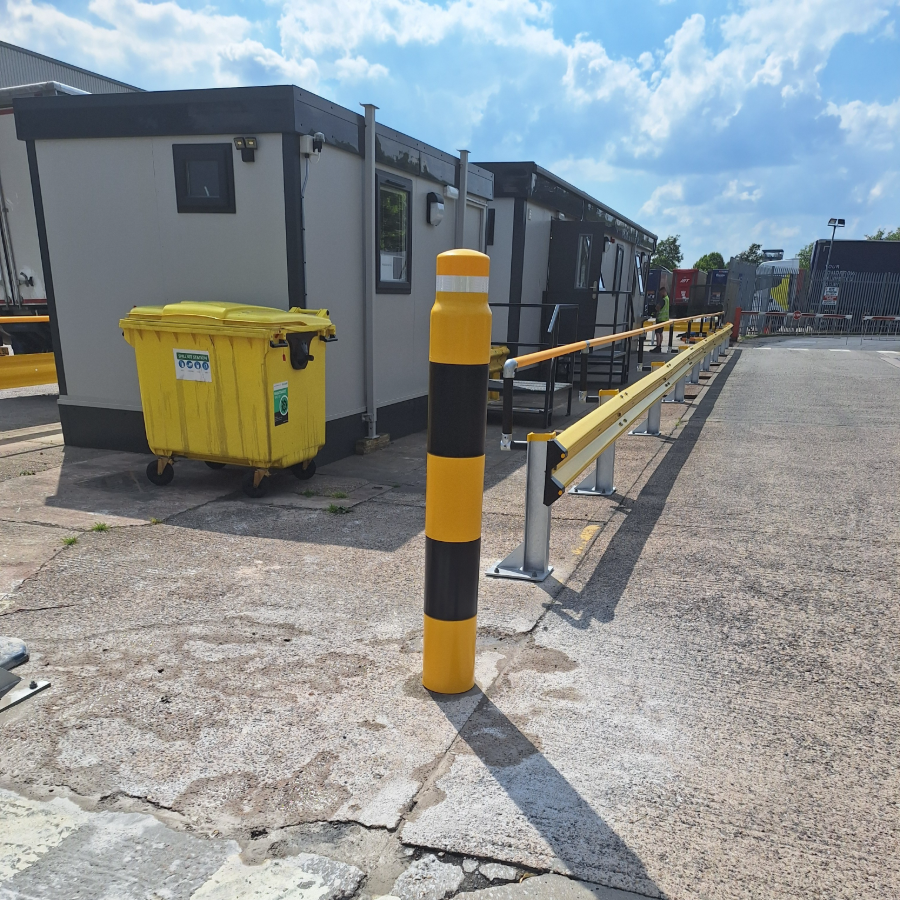
There is no single product that can correct every traffic management problem. Barriers should form part of a wider system that considers the site, vehicles and people together.run. A modular system may permit the affected component or section to be replaced, subject to the manufacturer’s instructions and an assessment of the adjoining parts.
How should a replacement barrier be specified?
Specification should start with the risk, not the product.
The HSE guidance on protecting workplace structures recommends considering:
- What is being protected
- How likely a collision is
- How fast the vehicle may be moving
- The likely impact angle
- The weight of the vehicle
- The possible consequences of a collision
These factors help establish the required level and location of protection. The replacement barrier should then be specified according to the assessed risk, taking account of its documented impact performance, deflection, height, fixing requirements, floor condition and available clearance.
Why speed matters
Speed has a significant effect on the energy generated during a vehicle impact. This is because velocity is squared when kinetic energy is calculated.
Doubling a vehicle’s speed produces four times the kinetic energy, assuming its mass remains the same.
Example based on a total moving mass of 3,500 kg. These figures are illustrative and should not be used as a barrier specification. Vehicle mass, load, impact angle, point of impact, product test conditions and documented performance must also be considered.
What should impact test data tell you?
When comparing barrier systems, ask for more than a general claim that a product is impact tested.
Useful information includes:
- Impact energy in joules
- Impact angle
- Vehicle mass and speed equivalence
- Measured deflection
- Barrier length and post spacing
- Impact height
- Fixings and substrate used during testing
- The product configuration covered by the result
PAS 13:2017 gives recommendations covering safety barrier impact resilience, dimensions and positioning, together with criteria for impact testing. It is a code of practice, not a substitute for a site-specific risk assessment.
A Brandsafe product example
The Brandsafe Double Bumper Barrier has been tested in accordance with PAS 13 using a weighted pendulum rig.
Published performance data for the tested configuration includes:
- 14,200 joules at a 90° impact angle
- 28,400 joules at a 45° impact angle
- A 90° impact equivalent to a 3,500 kg forklift travelling at 6.4 mph
- A measured deflection of 214 mm
- Barriers installed using M12 Safety Plus Anchors
These results apply specifically to the system and configuration tested. They should be considered alongside the site layout, available deflection space, floor condition and anticipated vehicle activity.

Preventing repeated barrier damage
Preventing repeated damage begins with understanding how vehicles and pedestrians move through the site. Impact and near-miss locations should be recorded, with particular attention paid to reversing areas, crossings, blind corners and other points where routes interact. Reviewing this information over time can reveal patterns that might otherwise be missed.
The assessment should also consider whether vehicle types, loads or operating practices have changed. Lighting, signs, surface markings, speed controls and driver instructions should remain suitable for the current environment. Any space required for a barrier to deflect safely must also be kept clear.
The expected vehicle impact should be compared with the barrier’s documented performance. Where repeated contact occurs, the layout and traffic management system should be reassessed rather than repeatedly repairing or replacing the same components.
Barrier damage is not only a maintenance issue. It is valuable operational information that can reveal where vehicle routes, working practices or protective measures need further attention.
Frequently asked questions
Can a polymer barrier remain in use if it returns to its original shape?
A flexible barrier reforming after contact may be part of its intended behaviour. However, the posts, connections, anchors, floor and protected clearance should still be inspected. Visual recovery of the rail does not confirm that every part of the system is unaffected.
Can a bent steel barrier be straightened?
A permanently bent component should not be straightened and returned to service without approval from the manufacturer or a competent technical assessment. Straightening, heating or welding may alter the component and may not restore its original performance.
Are scratches and scuffs a problem?
Light surface marking may be cosmetic, but the impact should still be recorded and the complete system checked. Monitoring impact locations can also reveal patterns that might otherwise be missed.
How often should safety barriers be inspected?
Inspection frequency should reflect the risk, traffic volume, operating environment, previous incidents and manufacturer’s guidance. Barriers should also be inspected following a known impact or whenever damage is reported.
Does a PAS 13 tested barrier make a site legally compliant?
No single product makes an entire workplace compliant. PAS 13 provides recommendations and a test method for workplace safety barriers. Employers retain wider duties relating to risk assessment, safe traffic routes, training, maintenance and workplace organisation. The HSE’s workplace transport legislation guidance provides an overview of these responsibilities.
Are floor markings and signs enough?
That depends on the risk. Markings and signs are important for communication, but locations where people or vulnerable assets are exposed to vehicle impact may require physical protection. Wherever reasonably practicable, the most effective approach is to keep pedestrians and vehicles on separate routes.
Should a damaged barrier be replaced with the same product?
Only if the original system remains suitable for the current risk. If vehicle types, loads, speeds, routes or operations have changed, the replacement should be reassessed rather than copied automatically.
Need help assessing existing impact protection?
Brandsafe Site Safety Audits follow a structured Inspect, Report and Recommend process. Our team can review existing barriers, vehicle and pedestrian routes, vulnerable infrastructure and recurring impact locations, before outlining practical repair, replacement or redesign options.
This article provides general guidance and does not replace a site-specific risk assessment, manufacturer’s instructions or competent technical advice.